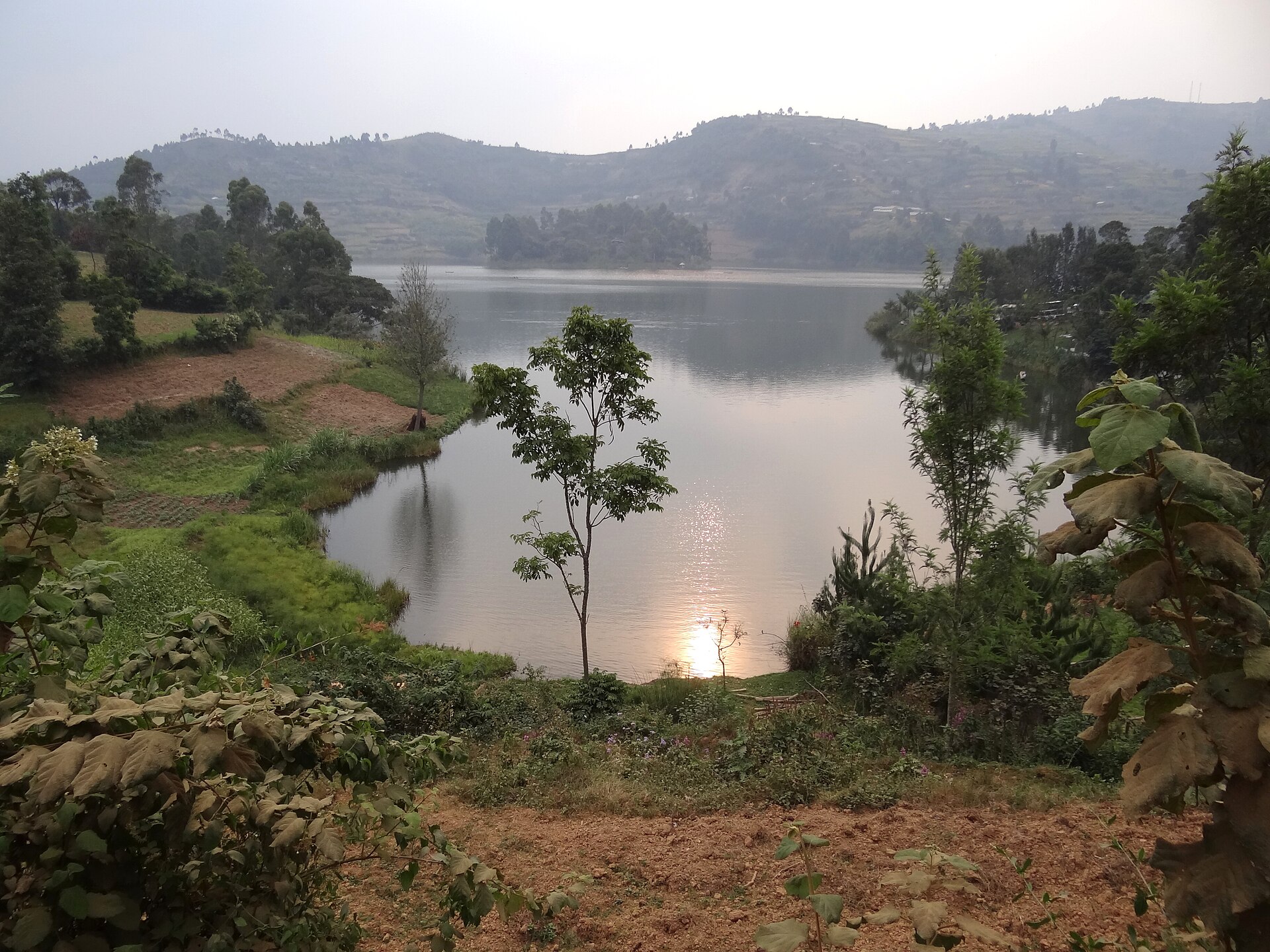
Known as Uganda’s “Switzerland,” Lake Bunyonyi is a scenic crater lake roughly an hour from Bwindi, ringed by terraced hillsides and dotted with small islands. Traditional dugout canoe trips and island-hopping make for a relaxed, low-key rest day between trekking days.
A popular overnight stop on the way to or from Bwindi, with a noticeably slower pace than the forest parks.
The nickname reflects the lake’s scenery as much as
its cooler, higher-altitude climate — terraced hillsides descending directly to the water, dozens of
small islands scattered across the lake’s surface, and a genuinely dramatic crater-lake setting that
feels distinctly different from the dense rainforest most of a Bwindi-based itinerary otherwise involves.
Formed within a volcanic crater rather than a river valley, Bunyonyi’s depth and clarity are notable even
by East African lake standards, and the absence of hippos or crocodiles makes it one of the few lakes in the
region genuinely safe for swimming.
WHAT TO DO AT THE LAKE
Canoeing, Island-Hopping, and Genuine Rest
Traditional dugout canoe trips remain the signature
Bunyonyi activity — a quiet, low-exertion way to move between the lake’s islands, several of
which carry their own local history and legend. Island-hopping by canoe or motorboat lets guests visit
multiple islands in a single outing, each with a distinct character, from small farming communities to
islands historically used for specific cultural or even quarantine purposes. Beyond the water-based
activities, the lake’s cooler climate and slower pace make it a genuinely restful stop, distinct from
the more activity-packed rhythm of a Bwindi trekking itinerary.
Why This Fits So Well as a Rest Day
Lake Bunyonyi sits roughly an hour from Bwindi, making it
a natural overnight stop either heading toward or away from your gorilla trekking base, rather than a
significant detour requiring dedicated travel time. Its noticeably slower pace — no scheduled treks,
no early departures, nothing beyond a relaxed canoe trip if you choose one — makes it one of the more
effective rest-day options available on a Uganda itinerary, particularly for guests trekking multiple gorilla
families or combining Bwindi with other demanding activities.
Frequently Asked Questions
Is swimming actually safe here?
Yes — unlike many East African lakes, Bunyonyi has no hippo or crocodile population, making it one of
the few genuinely swimmable lakes in the region.
How many nights should we plan at Bunyonyi?
One night is typical for a rest stop between Bwindi and onward travel; two nights allows more time for
island-hopping and genuine relaxation if your itinerary has the flexibility.
Is this suitable for families with children?
Yes — the relaxed pace, safe swimming, and gentle canoe trips make it one of the more family-friendly
stops on a Uganda gorilla-trekking itinerary.
What’s the history behind some of the
islands?
Several islands carry local legends and historical uses, including at least one historically associated
with unmarried pregnant girls in pre-colonial custom — your guide can share the specific stories tied
to whichever islands you visit.
Can we combine this with the Batwa Cultural
Trail or Buhoma Village Walk?
Given the roughly hour-long transfer from Bwindi, Bunyonyi is typically visited on a separate day from these
Buhoma-sector activities, though all fit comfortably within a broader multi-day Uganda itinerary.
WHY IT’S WORTH ADDING
A Genuine Change of Pace
A Uganda gorilla-trekking itinerary, however
well-planned, involves a lot of early mornings, physical exertion, and forest immersion in fairly quick
succession. Lake Bunyonyi offers a genuine counterpoint — open water, terraced hills, and a pace of
life that asks nothing of you beyond deciding whether to take a canoe out. For travellers who want their
trip to include real rest alongside its wildlife highlights, rather than treating every day as another
activity to check off, Bunyonyi is one of the clearest ways to build that balance into a Uganda itinerary.
Where to Stay
Accommodation around Lake Bunyonyi ranges from simple
lakeside lodges to more elevated retreats with sweeping views across the water and islands, several set
directly on their own private island for maximum quiet and separation from other guests. We select your
specific property based on the overall style and budget of your wider Uganda itinerary, aiming for a genuine
sense of place rather than a generic transit stop between Bwindi and onward travel.
Getting There
Lake Bunyonyi sits near Kabale, roughly an hour’s
drive from Bwindi’s Rushaga and Nkuringo sectors, making it a natural stopover rather than a separate
destination requiring dedicated travel. Most itineraries route through Bunyonyi either immediately before or
after a Bwindi gorilla trek, using the short transfer time to full advantage rather than treating the lake as
an afterthought bolted onto an already packed schedule.
GOOD TO KNOW
Lake Bunyonyi at a Glance
SETTINGVolcanic crater lake, terraced hillsides, roughly 1 hour from Bwindi
BEST FORRest days, canoeing, island-hopping, swimming
TYPICAL STAY1–2 nights, before or after Bwindi gorilla trekking
NOTABLE FEATURENo hippos or crocodiles — genuinely safe for swimming
What to Bring
Swimwear, given how rare a genuinely safe swimming lake is in this part of Africa
A light jacket for cooler mornings and evenings at the lake’s higher elevation
Sun protection for time on the water
A camera for the terraced hillsides and island scenery
Comfortable, relaxed clothing — there’s no dress requirement for any planned activity here
The Islands and Their Stories
Bunyonyi’s scattered islands each carry their own
local character and, in several cases, genuine folklore — from small farming communities visible from
the water to islands with specific historical or cultural associations your guide can explain in detail during
a canoe or boat trip. Rather than a single generic “island tour,” a well-guided visit here treats each stop as
distinct, giving guests a sense of the lake as a genuinely inhabited landscape rather than simply a scenic
backdrop for photographs. Ask your guide which islands are included on the day and what makes each one
distinctive before setting out, so you know what to look and listen for along the way, and to get the most out of the time you spend on the
water.
A Photographer’s Lake
Bunyonyi’s terraced hillsides, calm water, and
scattered islands make it a genuinely rewarding subject for photography, particularly around sunrise and
sunset when the crater’s surrounding hills catch soft, warm light across the water. Unlike the fast-paced,
reaction-driven photography demanded by gorilla or chimpanzee trekking, Bunyonyi allows time to compose shots
carefully from a stable canoe or the shoreline itself — a welcome change of pace for photographers who
spent the preceding days chasing quick wildlife opportunities in dense forest.