
June 20, 2026 · 6 min read
Photo: Charles J. Sharp, CC BY-SA 4.0
Queen Elizabeth National Park — Uganda’s Most Visited Wildlife Destination
Queen Elizabeth National Park covers 1,978 square kilometres of southwestern Uganda between Lake George to the north and Lake Edward to the south, connected by the Kazinga Channel — a natural water channel that is one of the most productive wildlife observation corridors in East Africa. The park’s combination of savannah grassland, forest patches, volcanic craters, and the Kazinga Channel’s aquatic ecosystem produces one of Uganda’s richest multi-habitat wildlife experiences, and its proximity to Bwindi Impenetrable National Park (about two to three hours by road from the Ishasha sector to Buhoma, longer from Mweya) makes it the natural complement to the gorilla trekking component of any Uganda itinerary.
The Kazinga Channel — The Park’s Wildlife Centrepiece
The Kazinga Channel boat cruise is Queen Elizabeth’s most consistently rewarding wildlife activity — a two-hour boat trip from Mweya along the channel that links Lake George and Lake Edward, passing the most productive waterside wildlife habitat in the park. Hippopotamus aggregations in the channel shallows (with some of the highest hippo density of any water body in East Africa), Nile crocodile on the banks, large herds of African buffalo and elephant coming to drink at the channel margin, and the channel’s extraordinary bird diversity — over sixty waterbird species documented on the channel — combine to produce a wildlife density per unit of time that the road-based game drive cannot match.
Ishasha Sector — The Tree-Climbing Lions
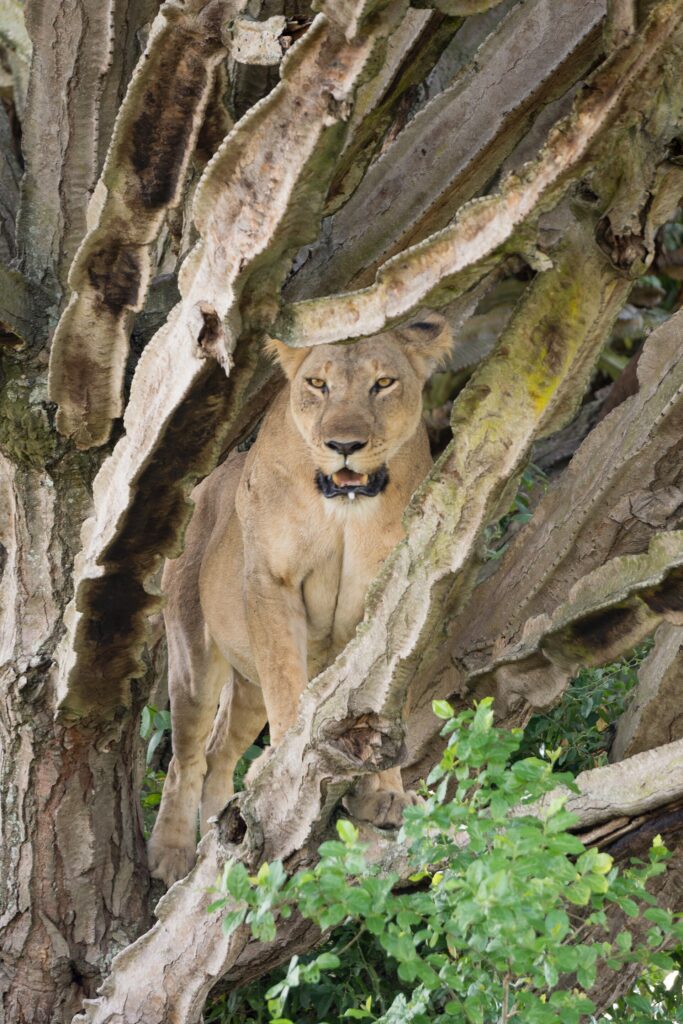
The Ishasha sector in southern Queen Elizabeth National Park is the site of Uganda’s most famous wildlife phenomenon: the tree-climbing lion prides that spend significant portions of the day resting in the fig trees (Ficus natalensis) of the Ishasha valley floor, visible from below as large cat silhouettes draped across the horizontal branches in a behaviour not documented in lion populations anywhere else in East Africa except the Ishasha and the Lake Manyara area of Tanzania. The tree-climbing behaviour is documented to be specific to the Ishasha lion population — not a species-wide behaviour but a locally learned and maintained tradition. Lion sightings in the fig trees are most probable in the morning (when the lions have finished the night’s hunting and are seeking the fig tree shade) and late afternoon.
The Northern Kasenyi Track
The northern sector’s Kasenyi track — the main game drive road in the savannah area between Mweya peninsula and the park’s northern boundary — is the primary lion, leopard, and large herbivore observation route. The Uganda kob (the endemic antelope whose lek behaviour — territorial displays by males in aggregated mating arenas — produces the most distinctive savannah spectacle in Queen Elizabeth), along with topi, waterbuck, warthog, giant forest hog, and African elephant are regularly encountered on the Kasenyi morning drive.
When to Visit
Queen Elizabeth’s best game drive conditions mirror the broader Uganda dry season pattern: June-September and December-January for the driest trails and most comfortable conditions. The Kazinga Channel boat cruise is good year-round, with the highest hippo density during the dry season when the water level drops and the hippos concentrate in the remaining deep sections.
More to Do Beyond the Game Drives
Chimpanzee tracking in Kyambura Gorge. On the park’s eastern edge, a sunken river gorge holds a small, habituated chimpanzee community. Treks start in the morning and follow the river through the gorge forest. Sightings are less certain than in Kibale, but the setting, a strip of rainforest cut into open savannah, is unlike anywhere else in Uganda. Read more on our Kyambura Gorge chimp trekking page.
Lion tracking with researchers. In the Kasenyi plains, a small number of visitors each day can join the park’s carnivore research team as they locate collared lions and other predators at dawn. It is the most reliable way to see lions in the north of the park and gives a real insight into how the population is monitored. See predator tracking in Queen Elizabeth.
The crater lakes and Lake Katwe. The Katwe explosion craters north of Mweya make a scenic drive with views over the Rift Valley floor. Nearby, the community at Lake Katwe still harvests salt by hand from the crater lake, a short and memorable cultural visit.
Maramagambo Forest. In the south of the park, forest trails lead to a bat cave where pythons are often seen hunting the roosting bats, and the forest holds several primate species and forest birds.
Where to Stay
Lodges are spread across three areas, and the right one depends on your route. Mweya Peninsula sits above the Kazinga Channel and puts the boat cruise and the Kasenyi plains on your doorstep. The Kyambura and Katwe area on the eastern side suits travellers combining chimps and game drives; Kyambura Gorge Lodge is our favourite here. Ishasha in the south has small tented camps on the river and is the logical last stop before Bwindi, so you can look for the tree-climbing lions on the way south.
Getting There and How Long to Stay
Most visitors arrive by road from Kibale and Fort Portal to the north, about two to three hours, or continue south from the park to Bwindi through Ishasha. Scheduled and charter flights also use the Mweya and Kasese airstrips, which saves a long drive from Entebbe. Two nights is the minimum to fit in a morning game drive, the Kazinga Channel cruise and one extra activity. Three nights lets you add Kyambura Gorge or lion tracking and still drive through Ishasha unhurried.
Queen Elizabeth National Park FAQs
Can you see the Big Five in Queen Elizabeth National Park?
You can see four of them: lion, leopard, elephant and buffalo. There are no rhinos in the park; Uganda’s only rhinos are at Ziwa Rhino Sanctuary.
Are the tree-climbing lions always in the trees?
No. They use the Ishasha fig trees most during the heat of the day, but sightings are never guaranteed. Allowing a full morning or afternoon in Ishasha gives the best chance.
Is the Kazinga Channel boat cruise worth it?
Yes. It is the most reliable activity in the park, with close views of hippos, buffalo, crocodiles, elephants and a huge variety of waterbirds, and it works well in any season.
How far is Queen Elizabeth from Bwindi?
Roughly two to three hours from Ishasha to Bwindi’s Buhoma sector, and longer from Mweya or to the southern Rushaga and Nkuringo sectors.
Ready to start planning? Browse our Rwanda & Uganda safaris or contact us to build your itinerary.
Ready to Plan Your Private Gorilla Trip?
Tell us your dates and what you're hoping to experience — we reply within 48 hours with a bespoke proposal. Not ready to book? We're happy to answer questions first.
START PLANNING ↗