June 20, 2026 · 6 min read
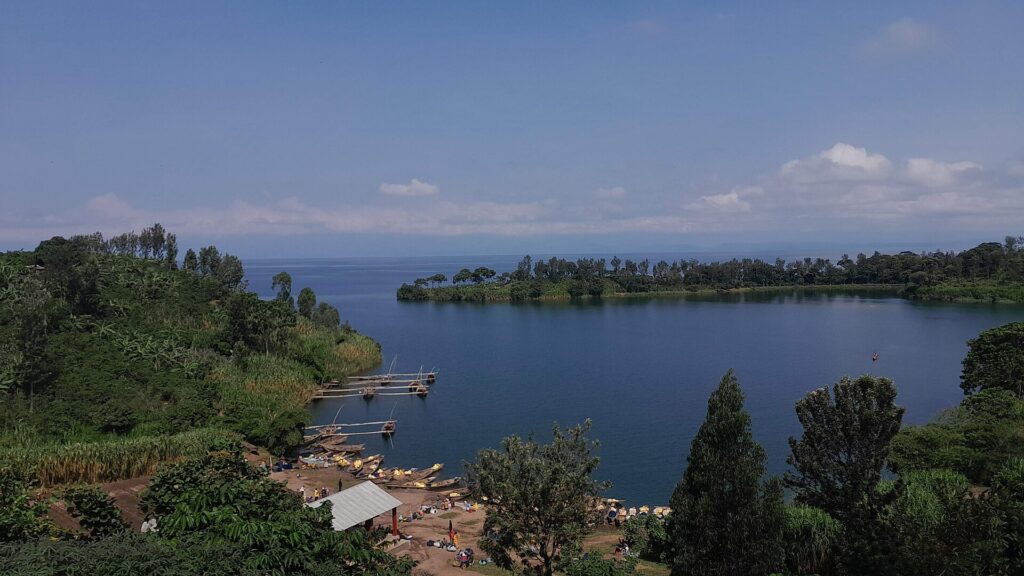
Photo: Nina R from Africa, CC BY 2.0
Lake Kivu — Rwanda’s Lakeside Escape
Lake Kivu sits at 1,460 metres altitude on the border between Rwanda and the Democratic Republic of Congo, covering 2,700 square kilometres of water that is one of Africa’s Great Rift Valley lakes and one of the world’s most scenically striking bodies of fresh water. The Rwandan shore stretches along the western edge of the country from Gisenyi (now Rubavu) in the north — adjacent to the Congolese city of Goma and within an hour’s drive of Volcanoes National Park — to Cyangugu (now Rusizi) in the south, with the smaller lakeside town of Kibuye (Karongi) in the middle. The lake’s combination of altitude, equatorial light, island-scattered blue water, and the drama of the Congolese volcanic horizon provides a landscape that is genuinely extraordinary by any measure of African scenery.
Gisenyi — The Northern Shore and Gorilla Trek Proximity
Gisenyi is the Lake Kivu town most commonly included in Rwanda gorilla trekking itineraries — it is approximately an hour’s drive from Kinigi, the gateway to Volcanoes National Park, and its lakeside position provides an appealing contrast to the mountain forest environment of the gorilla trekking days. Spending the night before or after a gorilla trek day at a Gisenyi lakeside property — the Serena Lake Kivu Hotel is the established luxury option, with its direct lake access and mountain views — adds a dimension to the Rwanda gorilla trip that a purely Kinigi-based itinerary does not have. The Coco Beach promenade at Gisenyi, running along the lake shore through a neighbourhood of papaya trees and lakeside cafés, is one of the more pleasant late afternoon walking environments in Rwanda.
Kibuye — Mid-Lake Tranquility
Kibuye, on a promontory that juts into the lake at mid-shore, provides the most island-scattered lake view on the Rwandan side — the Kibuye promontory is surrounded by small wooded islands that break the lake surface into a series of enclosed bays and channels, producing a landscape quality that is different from both the open northern lake at Gisenyi and the southern lake at Cyangugu. The Cormoran Lodge on the Kibuye promontory is the most characterful accommodation option at the mid-lake position, built around a colonial-era stone building with terraced gardens extending down to the lake. For visitors who want the deepest possible immersion in the lake environment — kayaking between islands, swimming in the altitude-cooled water, evening sundowners over a horizon of Congolese mountains — Kibuye is the right position.
The Methane Gas Story
Lake Kivu is one of only three lakes in the world classified as “exploding lakes” — bodies of water where dissolved carbon dioxide and methane gas are present in concentrations that, if released catastrophically by a limnic eruption triggered by volcanic or seismic activity, could produce a surface gas release of fatal scale. The other two are Lake Nyos and Lake Monoun in Cameroon, where historic limnic eruptions killed between 37 and 1,700 people. The presence of dissolved methane in Lake Kivu at commercial-scale concentrations has led Rwanda and Congo to develop gas extraction projects — the KivuWatt project extracts and generates electricity from Lake Kivu methane — that simultaneously provide energy and reduce the dissolved gas concentration. The engineering of extracting energy from a potentially catastrophically unstable geological situation is one of the more interesting stories of resource development in Rwanda.
Lake Kivu Boat Trip
The standard Lake Kivu boat trip visits the islands scattered along the Rwandan shore. From Kibuye, boats reach Napoleon’s Island, shaped like a bicorne hat and home to a large fruit bat colony, and Amahoro Island, while trips from Gisenyi explore the northern bays. The smaller islands whose wooded profiles against the water are the defining visual experience of a lake trip — and provides the lake-level perspective of the surrounding mountain and volcanic landscape that is not available from the shore. The boat trips are typically organised through the lakeside lodges in one to three hour formats; the longer format allows landing on one or two islands for walking and birding. The lake’s bird community includes African fish eagle, pied kingfisher, malachite kingfisher, and the open-water birds that use the lake surface for feeding.
Things to Do on Lake Kivu
- Kayak or paddle between islands. Multi-day paddling trips along the shore are one of Rwanda’s best active adventures. See our Lake Kivu kayaking page.
- Walk or cycle the Congo Nile Trail. The 227 km route follows the lake shore from Rubavu to Rusizi through hills, coffee farms and fishing villages. A single day’s section is enough to get the feel. See the Congo Nile Trail.
- Visit a coffee washing station. The hills above the lake grow some of Rwanda’s best coffee, and several cooperatives show visitors how it is processed.
- Watch the fishermen at dusk. Fishing boats head out in the evening, often singing as they row, and their lanterns light the water through the night.
- Swim. The lake is generally considered free of bilharzia, and lodge beaches make it easy to cool off after trekking.
Adding Lake Kivu to a Gorilla Trip
Rubavu (Gisenyi) is the easy add-on: about an hour to an hour and a half from Volcanoes National Park, so one or two nights by the lake fit naturally after the gorilla trek. Karongi (Kibuye) is about two to three hours further south and suits travellers continuing to Nyungwe for chimpanzees, since the lake road links the two. Many of our Rwanda routes, including the honeymoon itinerary, include two quiet nights here between the forest days. For hotels, see Lake Kivu’s best hotels and lodges.
Lake Kivu FAQs
Is Lake Kivu safe to swim in?
Yes. Swimming at lodge beaches in Rubavu and Karongi is common, and the lake is generally regarded as bilharzia-free. The dissolved gas lies deep below the surface and is monitored.
How many nights should I spend on Lake Kivu?
Two nights is ideal: one full day for a boat trip, kayaking or a walk, and time to rest after trekking.
Rubavu or Karongi?
Rubavu for a short, easy add-on close to the gorillas. Karongi for quieter island scenery and if you are heading on to Nyungwe.
Ready to start planning? Browse our Rwanda & Uganda safaris or contact us to build your itinerary.
Ready to Plan Your Private Gorilla Trip?
Tell us your dates and what you're hoping to experience — we reply within 48 hours with a bespoke proposal. Not ready to book? We're happy to answer questions first.
START PLANNING ↗