A gentle guided walk through Buhoma village on the edge of Bwindi Impenetrable Forest, visiting a local blacksmith, banana beer brewer, traditional healer, and a primary school, with a traditional dance performance along the way.
A relaxed, low-cost half-day add-on that puts direct tourism income into the community bordering the park.
STARTING POINTBuhoma trading centre, at the edge of Bwindi Impenetrable Forest.
BEST TIME TO GOYear-round.
DIFFICULTYEasy — flat village paths.
WHAT TO BRING
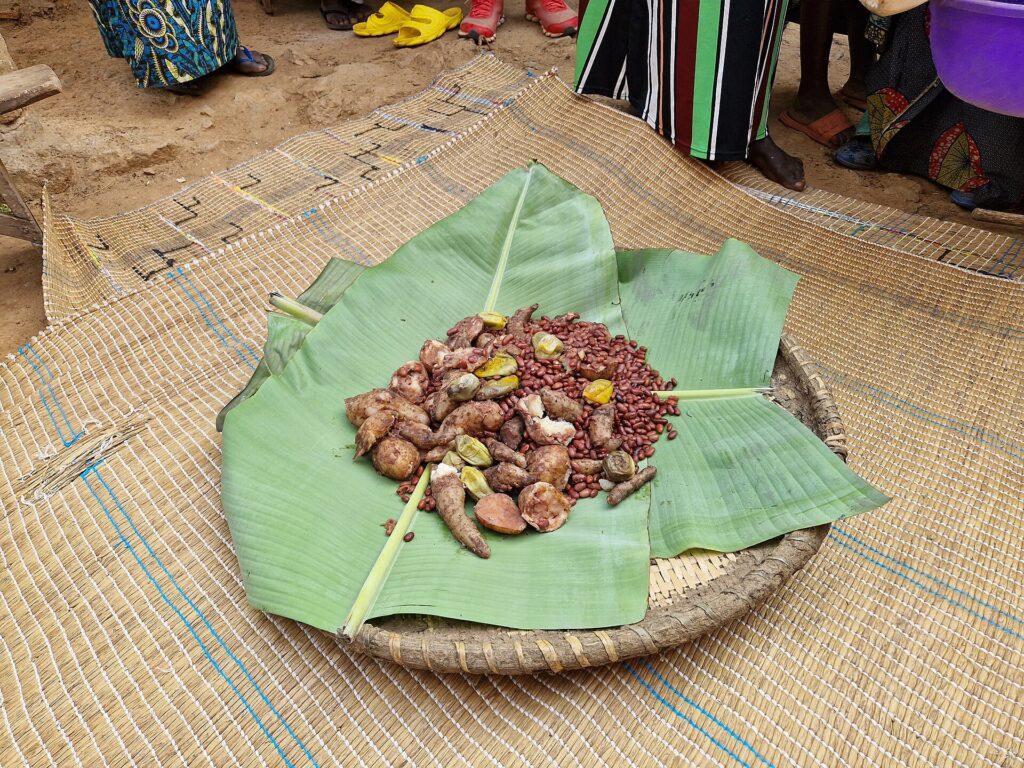
Traditional food prepared by a Batwa woman, served on banana leaves
Pack List
Comfortable shoes
Cash for local crafts
What the Walk Actually Covers
Rather than a generic village tour, the Buhoma Village
Walk is built around specific stops with local residents practising their actual trades — a blacksmith
demonstrating traditional metalworking, a banana beer brewer walking guests through the fermentation process
used for generations in the region, and a traditional healer explaining the plant-based remedies still used
alongside modern medicine in the community. A visit to the local primary school adds a direct, human dimension
often missing from wildlife-focused itineraries, and the traditional dance performance along the route gives
the walk a genuinely celebratory close rather than ending on an purely educational note.
Because Buhoma is the longest-established gorilla
trekking sector in Uganda, the community here has decades of experience hosting visitors, which shows in how
naturally the walk moves between stops and how comfortably residents engage with guests compared to some
newer community-tourism initiatives elsewhere in the region.
WHY IT MATTERS
Tourism Income Reaching the Community Directly
At $25 per person for roughly three hours, the walk is
one of the most direct ways a Bwindi visit puts income straight into the hands of the community bordering
the park — the blacksmith, brewer, healer, and school all receive a share of the fee, rather than
tourism revenue flowing primarily to lodges and tour operators. For travellers who want their visit to
tangibly benefit the people living alongside the gorillas, rather than only the gorillas and the park
itself, this walk is a genuinely meaningful, low-cost way to do that.
Who Should Add This
The Buhoma Village Walk suits almost any traveller
staying in the sector — it requires no particular fitness, carries no minimum age restriction like
gorilla trekking or the volcano hikes, and fits comfortably into a rest day or an afternoon following a
morning trek. It is a particularly good fit for families with children too young for gorilla trekking’s
minimum age of 15, and for any traveller who wants direct, unscripted interaction with the community rather
than a purely wildlife-focused trip.
Is this suitable for young children?
Yes — unlike gorilla trekking, there is no minimum age, and the gentle pace and engaging stops make it
genuinely enjoyable for children, not simply tolerable.
How much walking is actually involved?
A gentle, easy-paced walk between stops within the village itself — nothing comparable to the forest
trekking trails, and accessible to guests of nearly any fitness level.
Can we buy items directly from the artisans we
meet?
Yes — purchasing crafts or goods directly from the blacksmith or other artisans is welcomed and
provides additional income beyond the walk’s base fee, though never required or pressured.
Is the school visit disruptive to actual
classes?
Visits are arranged respectfully around the school’s schedule, typically as a brief, non-disruptive stop
rather than an intrusion into ongoing lessons.
When should we schedule this during our
Bwindi stay?
Most guests add it on a non-trekking day or the afternoon following a morning gorilla trek, given its
relaxed pace and short overall duration of around three hours.
Is this different from the Batwa Cultural
Trail?
Yes — the Batwa Cultural Trail focuses specifically on the Batwa
community’s indigenous forest history, while the Buhoma Village Walk covers the broader agricultural
and trading village life of Buhoma itself. Many guests do both, given how different the two experiences are.
Do we need to book in advance?
Booking ahead as part of your itinerary is recommended, though given its modest scale and the sector’s
long history hosting this walk, it’s generally easier to arrange on shorter notice than most other
activities in the park.
A DIFFERENT SIDE OF BWINDI
The Human Story Behind the Forest
It is easy for a Bwindi itinerary to become entirely
about the forest and the gorillas within it, overlooking the community that has lived alongside that forest
for generations and whose livelihoods are now closely tied to its protection. The Buhoma Village Walk
corrects that balance directly — putting faces, trades, and daily routines to the abstract idea of
“the community bordering the park” that conservation literature so often references without detail. For many
guests, the conversations and demonstrations along this walk end up being among the most memorable parts of
an otherwise wildlife-focused trip, precisely because they offer a kind of direct human connection the
trekking itself, however powerful, doesn’t provide.
What to Bring
Comfortable walking shoes — no technical hiking gear required
Cash for optional purchases from the artisans you meet along the way
A camera, with respectful awareness of when to ask before photographing residents
Sun protection, given the walk takes place largely in open village terrain rather than forest shade
An open, curious attitude — the walk rewards genuine engagement over passive observation
Combining This With Other Buhoma Activities
The Buhoma Village Walk pairs naturally with a rest day
following a gorilla trek, or with other lower-intensity Bwindi activities like guided birding walks along the
forest boundary. Because it requires no advance permit booking through UWA the way gorilla trekking does, it
offers considerably more scheduling flexibility — we can typically arrange it with only a day or two of
notice once you’re already in the sector, making it a useful option for filling an unplanned free
afternoon during your stay.
The Traditional Healer Stop, in Context
The visit to a traditional healer is often the stop
guests find most unexpected — a genuine window into a healthcare tradition that continues to operate
alongside, rather than in place of, modern medicine in much of rural Uganda. Rather than a staged performance,
the conversation typically covers real plant-based remedies still in active use, the healer’s own
training and role within the community, and how traditional and modern medical approaches coexist locally.
It’s a detail that adds genuine depth to the walk beyond the more expected craft demonstrations.
Supporting the Local School
The primary school visit is arranged as a brief,
respectful stop rather than a disruption to actual lessons, giving guests a sense of daily life for children
in the community bordering the park. Some guests choose to bring school supplies or make an additional
contribution beyond the walk’s base fee, which we can advise on if you’d like to support the school
specifically as part of your visit — though nothing beyond the standard fee is expected or required. Ask
us in advance if you would like guidance on appropriate supplies to bring, since not everything a well-meaning
visitor packs is genuinely useful or wanted by the school itself. The experience tends to resonate particularly
with travelling families, whose own children often connect naturally with the students they meet, offering a
genuine point of comparison between their own daily lives and life in rural southwestern Uganda that a
guidebook, documentary, or second-hand account can ever fully replicate on its own for a visiting family group.