Suspended high above the forest floor, Nyungwe’s canopy walkway runs 160 metres through the treetops — one of the longest canopy walkways in Africa. Unlike the park’s forest treks, it requires no particular fitness level, making it accessible to nearly every traveller.
A popular half-day add-on either before or after a chimpanzee trek, with some of the best overhead views of the forest canopy and its birdlife anywhere in the park.
STARTING POINTIgishigishigi trailhead, about 8km from Uwinka Visitor Centre.
BEST TIME TO GOYear-round; clearest canopy and valley views come in the dry-season months.
DIFFICULTYEasy walking access, though the height is not suited to those uneasy with heights.
WHAT TO BRING
Pack List
Closed-toe shoes
Camera — this is the park’s best canopy-level photo opportunity
A light layer — breezier up on the bridge
What Makes This Walkway Distinctive
At 160 metres, Nyungwe’s canopy walkway ranks among
the longest in Africa, suspended well above the forest floor on a series of platforms and connecting bridges
that put visitors at eye level with the upper canopy rather than looking up at it from the ground. That vantage
point transforms the experience of Nyungwe’s forest — birds, primates, and insect life that remain
hidden from the forest floor become directly visible at canopy height, and the sheer scale of one of Africa’s
oldest rainforests is far easier to appreciate from above than from within it.
The walkway requires no particular fitness level to
complete, though guests with a significant fear of heights should know the platforms sit well above the
ground and involve some gentle swaying underfoot, characteristic of suspension-bridge construction.
WHO IT’S FOR
Genuinely Accessible to Nearly Everyone
Where chimpanzee trekking and forest hiking both demand
a real baseline of fitness, the canopy walkway asks very little physically — a short, well-maintained
approach walk followed by time on stable, purpose-built platforms and bridges. That accessibility makes it a
strong choice for families with children (minimum age 12), older travellers, or anyone in a group whose
fitness level doesn’t match the rest of the itinerary’s more demanding activities, without
sacrificing a genuinely memorable Nyungwe experience.
Combining This With Chimpanzee Trekking
Most guests pair the canopy walkway with a
chimpanzee trek on the same or an adjacent day, given both activities share
the same general area of the park and lodge base. A common pattern is chimpanzee trekking in the early morning,
when chimps are most active, followed by the canopy walkway later in the day once the initial trekking fatigue
has eased — or the reverse, using the walkway as a gentler warm-up activity before a more demanding
trekking day.
Frequently Asked Questions
Is the walkway safe?
Yes — it’s a well-maintained, purpose-built structure with safety railings throughout, regularly
inspected as part of the park’s infrastructure. The experience feels adventurous without carrying
genuine risk for visitors following standard guidance.
How long does the full experience take?
Typically two to three hours including the approach walk, time on the platforms, and the return —
considerably shorter and less demanding than a chimpanzee trek or any of the forest hikes.
Is this suitable for someone with a fear of
heights?
It depends on the severity — the platforms are stable and railed, but sit genuinely high above the
forest floor with visible drops below, and guests with significant height anxiety should consider this
honestly before booking.
What wildlife might we see from the
walkway?
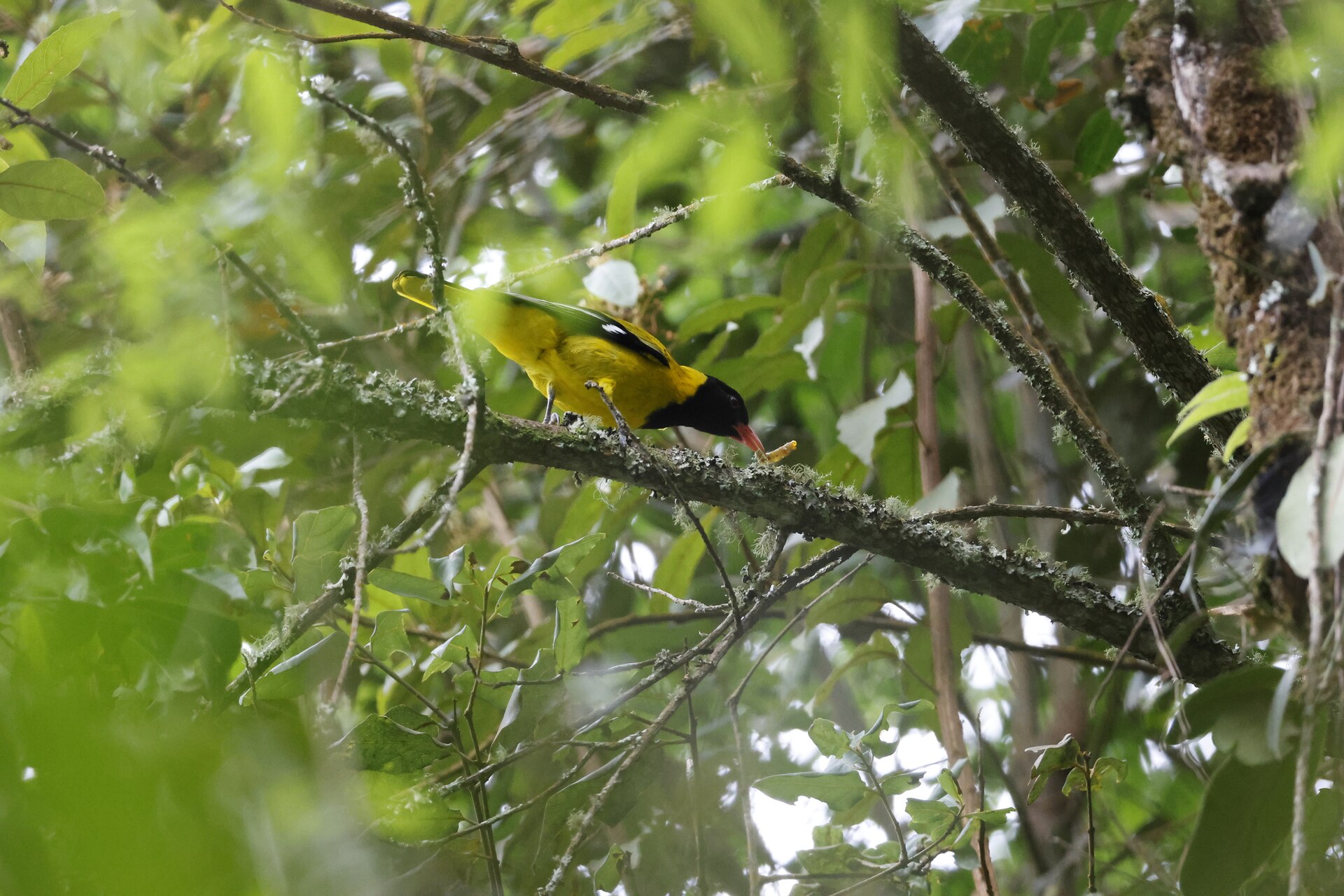
Canopy-dwelling birds and primates are the most likely sightings, given the elevated vantage point puts
visitors directly at the level where much of Nyungwe’s arboreal wildlife actually lives, rather than
looking up from below.
Do we need a separate permit like for
chimpanzee trekking?
No — the canopy walkway is booked as a standalone paid entry rather than through RDB’s permit
system, making it considerably simpler and more flexible to schedule.
Is a guide included?
Yes — a park guide accompanies every group, providing context on the forest ecology and pointing out
wildlife visible from the platforms along the way.
What’s the best time of day to visit?
Mornings tend to offer the most active birdlife and cooler temperatures, though the walkway is a pleasant
experience throughout the day regardless of timing.
WHY IT’S WORTH THE ADD-ON
A Perspective Ground-Level Trekking Can’t Offer
Nyungwe’s chimpanzee trekking and forest hikes both
happen at ground level, looking up into a canopy that remains largely out of reach and often out of view.
The walkway inverts that relationship entirely — putting visitors within the canopy itself, at the
height where much of the forest’s birdlife and primate activity actually occurs. For photographers
especially, this vantage point offers compositions simply unavailable from the forest floor, and for any
visitor curious about the scale and structure of one of Africa’s oldest rainforests, it provides a
perspective no ground-based activity in the park can replicate.
Getting There and What to Bring
The walkway entrance sits within Nyungwe National Park,
reachable by road from One&Only Nyungwe House and other park-adjacent accommodation without a lengthy separate
transfer. A moderate approach walk through forest precedes the platforms themselves, so comfortable closed-toe
shoes remain worthwhile even though the walkway itself demands little exertion.
Comfortable walking shoes for the approach trail
A rain jacket — Nyungwe is a rainforest and showers are possible in any season
Binoculars for spotting canopy-level birdlife from the platforms
A camera, ideally with a wide-angle option for the forest views
Scheduling This Around Your Nyungwe Stay
Because the walkway takes only two to three hours and
doesn’t require the early pre-dawn departure that chimpanzee trekking often does, it fits comfortably into
almost any part of a Nyungwe itinerary — a first-morning activity to ease into the park before a more
demanding trek, an afternoon addition after chimpanzee trekking concludes, or a standalone half-day for
travellers whose visit to Nyungwe is shorter than the two or three nights a fuller itinerary would allow.
A Notable Feature of Africa’s Rainforests
Canopy walkways of this scale remain relatively rare
across African rainforests, making Nyungwe’s 160-metre structure a genuinely notable feature rather than
a routine tourist installation. For travellers who have visited other rainforest destinations without
encountering a comparable structure, it’s worth treating as a distinctive Nyungwe-specific experience
rather than a generic canopy-walk add-on interchangeable with anywhere else. The specific engineering and
scale involved in suspending a stable walkway across 160 metres of forest canopy is itself worth appreciating,
independent of the wildlife-viewing opportunity it creates. Guests with an interest in engineering or
conservation infrastructure often find this aspect of the visit as memorable as the views and wildlife
themselves, adding an unexpected layer of appreciation to what might otherwise be framed purely as a
photo-opportunity stop rather than a genuinely engineered piece of conservation-tourism infrastructure.
Booking This as Part of Your Rwanda Trip
Because Nyungwe sits several hours from both Kigali and
Volcanoes National Park, most itineraries treat it as a distinct, multi-night leg of a wider Rwanda trip rather
than a day trip from elsewhere — the canopy walkway, chimpanzee trekking, and birding together typically
fill two to three nights based at One&Only Nyungwe House or a comparable property. We build the walkway into
that Nyungwe leg specifically, sequencing it alongside chimpanzee trekking and other park activities so your
time there is used efficiently without feeling rushed between one attraction and the next.