
June 20, 2026 · 6 min read
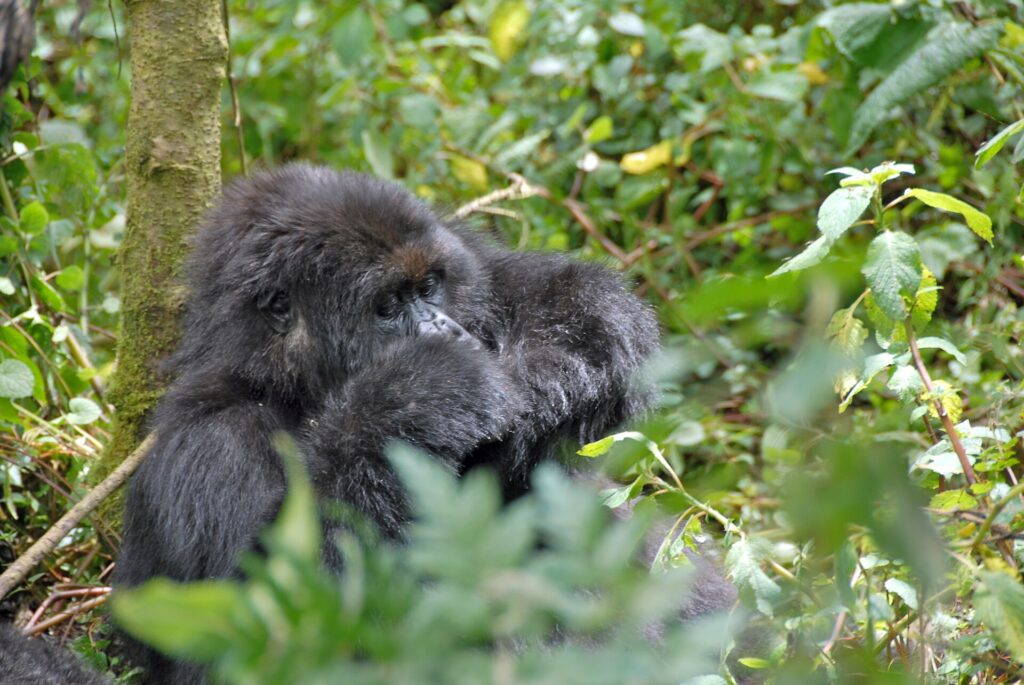
Photo: Maxime Ishmax, CC BY-SA 4.0
The Susa Gorilla Family — Rwanda’s Most Historically Significant Group
The Susa gorilla family is the most historically significant of Rwanda’s habituated gorilla groups — the family that Dian Fossey studied most closely during her years at the Karisoke Research Centre, and the one from which much of the foundational scientific understanding of mountain gorilla social behaviour was derived. Trekking Susa means visiting a family whose history is inseparable from the conservation movement that saved the species from extinction.
Susa’s History with Dian Fossey
Dian Fossey arrived in the Virunga mountains in 1967 and established the Karisoke Research Centre between Mount Bisoke and Mount Karisimbi. Over the following years, she focused her primary research on what became known as the Susa group — named after the Susa River that ran through their range. Her painstaking habituation work, conducted over years of daily non-threatening exposure, produced the world’s first truly habituated mountain gorilla family accessible for close-range observation.
The data Fossey collected on Susa — social hierarchies, infant development, inter-group interactions, vocalisation repertoire, ranging behaviour — formed the basis of her 1983 book Gorillas in the Mist and the scientific papers that established mountain gorilla ethology as a recognised field. Several of the individual gorillas she named and tracked in the Susa group appear in that literature. Their descendants are the animals visitors encounter today.
The Susa Group Today
Susa has long been one of the largest gorilla families visited in Volcanoes National Park. Its size changes over the years as members are born, die or leave, and at times it has split into separate groups, so ask your ranger for the current count. The family is led by a dominant silverback; the social structure includes multiple adult females, several adult males at various stages of development, juveniles, and typically at least one or two infants.
The family has experienced splits and reconfigurations over the decades — a natural process in large gorilla groups as sub-adult males challenge the dominant silverback and eventually establish their own ranges. The current Susa family represents the core of the original group, maintained through generations of continuous monitoring by Karisoke Research Centre staff and RDB rangers.
Trek Difficulty — Susa Is the Most Demanding
The Susa group ranges at higher altitude than most other Rwanda gorilla families — typically 3,000 metres and above, in dense afro-montane forest well inside the park’s interior. The approach hike to Susa is generally the longest and most physically demanding of the Rwanda gorilla treks, typically involving two to three hours of hiking through steep bamboo and hagenia forest at altitude.
This is not a deterrent — it is information. The Susa trek rewards the physical effort with an encounter that is richer in sheer volume of gorilla behaviour than almost any other family in the park. A large, active family with multiple age classes and complex social interactions produces more to observe in a single hour than a small, sedentary family at lower altitude.
Susa is recommended for: visitors with good physical fitness who want the most historically significant and behaviourally rich gorilla encounter in Rwanda; gorilla photographers who want the maximum density of animal activity in the hour; and visitors who have already done a lower-altitude family and want to experience the high-forest environment on a return trip.
Susa is not recommended for: senior visitors with limited mobility, visitors with knee or cardiovascular concerns, or first-timers who want to prioritise the encounter quality over the trek challenge. For these visitors, Sabyinyo or Amahoro is the better choice.
Photography with Susa
A large gorilla family produces more photographic opportunity per hour than a smaller group — more individuals, more interaction, more behaviour. The challenge with Susa is the altitude and the forest density at their typical range: light in deep afro-montane forest at 3,000 metres is limited, and a telephoto lens in low-light requires high ISO settings and a camera body that handles this well. The reward is the range and quantity of subject matter.
Requesting the Susa Family
Family assignment preferences can be communicated through a registered operator at the time of permit booking. For private groups on the Exclusive Mountain Gorilla Experience, family selection by special request is an official product feature — RDB will accommodate a Susa preference when availability permits. Standard permit holders can request Susa through their operator, though assignment is subject to the morning’s availability and is not guaranteed.
Susa at a Glance
| Named after | The Susa River, which runs through its range |
| Where it ranges | High on the slopes of Mount Karisimbi |
| Typical trek | Often the longest in the park, two to four hours or more each way |
| History | Descended from families Dian Fossey studied at Karisoke |
| Best for | Fit trekkers, history lovers and photographers wanting a large family |
How Families Are Assigned on Trek Day
You cannot book a specific family with a standard permit. On the morning of the trek, everyone gathers at Kinigi park headquarters by 07:00, and the park staff divide visitors into groups of up to eight, one group per family. Your driver-guide speaks to the staff on your behalf, so tell them the evening before what kind of trek you want: short and gentle, moderate, or as long and wild as possible. Requests are usually honoured where possible, but the final decision rests with the park. Only the Exclusive Mountain Gorilla Experience lets you choose the family in advance. Compare all the groups in our guide to Rwanda’s gorilla families.
Preparing for the Susa Trek
Treat the Susa trek as a proper mountain hike. Train with long walks on hills for several weeks, break in waterproof boots, and take a porter and a walking stick on the day. Carry at least two litres of water, snacks and a warm layer, since it can be cold and wet at 3,000 metres even in the dry season. If you want to add Fossey’s story to the day, the Dian Fossey tomb hike to the old Karisoke site makes a fitting separate excursion.
Susa Gorilla Family FAQs
Is Susa the family Dian Fossey studied?
Susa descends from the families Fossey studied around Karisoke, which is why it is often called her research group.
How hard is the Susa trek?
It is usually the most demanding trek in Rwanda, with long, steep climbs at high altitude. Choose it only if you are fit and comfortable hiking for several hours.
Can I request Susa?
Yes. Your driver-guide can ask for Susa at the morning briefing, and fit trekkers who ask early are often assigned it.
Ready to start planning? Browse our Rwanda & Uganda safaris or contact us to build your itinerary.
Ready to Plan Your Private Gorilla Trip?
Tell us your dates and what you're hoping to experience — we reply within 48 hours with a bespoke proposal. Not ready to book? We're happy to answer questions first.
START PLANNING ↗